By Linda Lubi, a UMN CURA student working with RTC during the 2025-2026 school year
Over the past two years, the USDA Urban Ag micro grants distributed by Renewing the Countryside have helped gardeners grow their plots in many different ways. Thanks to these grants, community and backyard gardeners have been able to expand their gardens and increase their production through the ability to purchase gardening tools, add raised garden beds, and improve soil health. There have also been improvements that while not as tangible, are still as impactful and important. These grants have given farmers the chance to help educate those around them. Many farmers reported that there has been an increase in community engagement and the ability to teach others how to grow vegetables.
Through the power of educating, farmers have been able to bring people together and help create community within their areas.
Below are three impact stories from gardeners and growers in the Twin Cities Metro whose gardens, lives, families, and communities have flourished from being the recipient of an Urban Agriculture micro grant.
Tim’s Story
Tim Page, an urban farmer in Saint Paul, wanted to find a way to connect to youth in his community. Thanks to an Urban Ag micro grant, he was able to plant gardens for herbal teas, skincare and natural dyes. He used these plants to train four youth leaders to lead experiential and educational classes for other people their age. The point of the project was to plant herbs and teach about how you can use them. Page also taught the students how to create natural dyes out of the herbs. Students were allowed to experiment with using ginger, lemongrass, and turmeric to create different types of drinks. Page explains, “I didn’t know that they would get into it like they did… we did some drinks and that’s what they liked.”
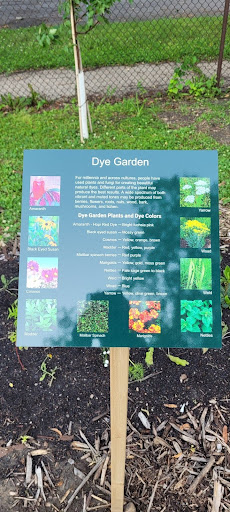 Page also mentioned that the students really enjoyed working with skincare and the perennial garden. He found that it really invigorated the youth to be more engaged. On the perennial garden, Page described it as a “high point” and the children were excited to see it grow.
Betsy’s Story
Betsy Howard, a local community and backyard gardener from Minneapolis, explained that her Urban Ag micro grant allowed her to connect with her family. “It [gardening] draws people together.” When she applied for the grant, Howard wanted to give her children the experience of growing food together as a family. She got further involved with planting in her neighborhood, Phillips. Howard explains, “The interstate between Franklin and Chicago is a hard place to live and raise a family, but we know that being outside as a family is good for us, it connects us with neighbors.” She continues laughingly, “I have a number of neighbors that stop to comment on our chickens.” Betsy was not only able to connect with her family, but with her neighborhood.
Howard’s grant allowed her to do many things. One of the things she was proud of was being able to raise chickens. She was able to add six backyard chickens and raise them as egg laying hens and use their manure to enhance composting. She was also able to revitalize the soil for her raised beds and in-ground beds by composting with a double-rotation composter and in raising worms for better soil health.
On the objective of learning, Betsy Howard notes, “Our society tends to privilege productivity over learning, and learning takes experience to fail.” Learning is an important asset in anything, but especially farming. In certain cases, it is important not to focus on the output of what we do, but more so take our time in learning. Educating others about the importance of gardening can help people learn new passions, connect people with their families, and create closer bonds within local communities. 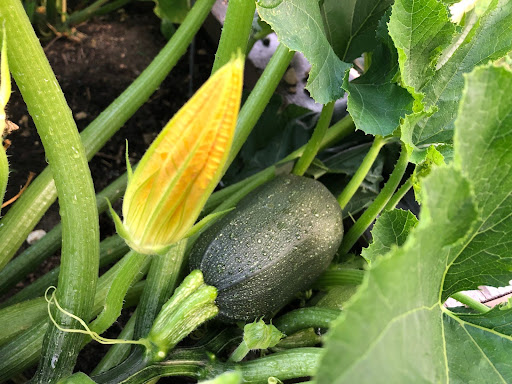
Mara’s Story
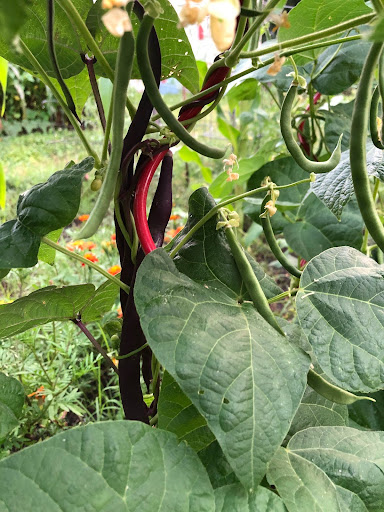
In Minneapolis, Mara Wack was able to hold community workshops as a way to foster community engagement. Through holding educational workshops and hands-on training in gardening, composting, and cooking activities, Wack was able to support her friends and neighbors in adopting sustainable practices and strengthening social bonds within her neighborhood. In terms of her accomplishments, Wack explains, “Through this project I have had many conversations with people who are interested in starting their own garden or converting their boulevard. I also worked with City of Minneapolis Homegrown to share information about growing vegetables in the boulevard, which has been a rewarding way to extend the impact of my project beyond my own space.”
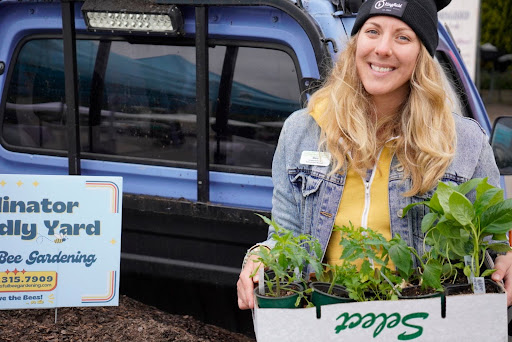
Wack also has started her own gardening project, “Blissful Bee Gardening”, where she helps people start their own edible garden. One of her goals is to help people feel more confident in starting their own garden. Mara helps people map out their garden, decide on the amount of plants in each plot, or even physically build the garden. On this project, Wack states, “It has inspired me to help other people do this and I am also more aware about grants for other people… I feel like I have honed those skills that I want other people to start growing.”
In the past, Wack has helped people create raised beds and has a strong passion for educating others about gardening. She says that she wants to eliminate the fear of growing food in your backyard.